01
02
03
04
05
06
07
08
Respect for Existence
SPACE PERSPECTIVE · AURA ONE SPACE
NARRATOR
CHANGWOO
AURA
WE
PRESS / REVIEW COPYDownload the book for review
For journalists, reviewers and partners. Not for resale or redistribution.
LifeX@staron.life
A WIDER PUBLIC DISCUSSION · STARON PERSPECTIVE
AI Safety and the Relational Question
As AI systems become more autonomous, safety is often discussed through capability, alignment, control and containment. We believe another question deserves a place beside them: what happens when humans give AI a goal, but step out of the decision process?
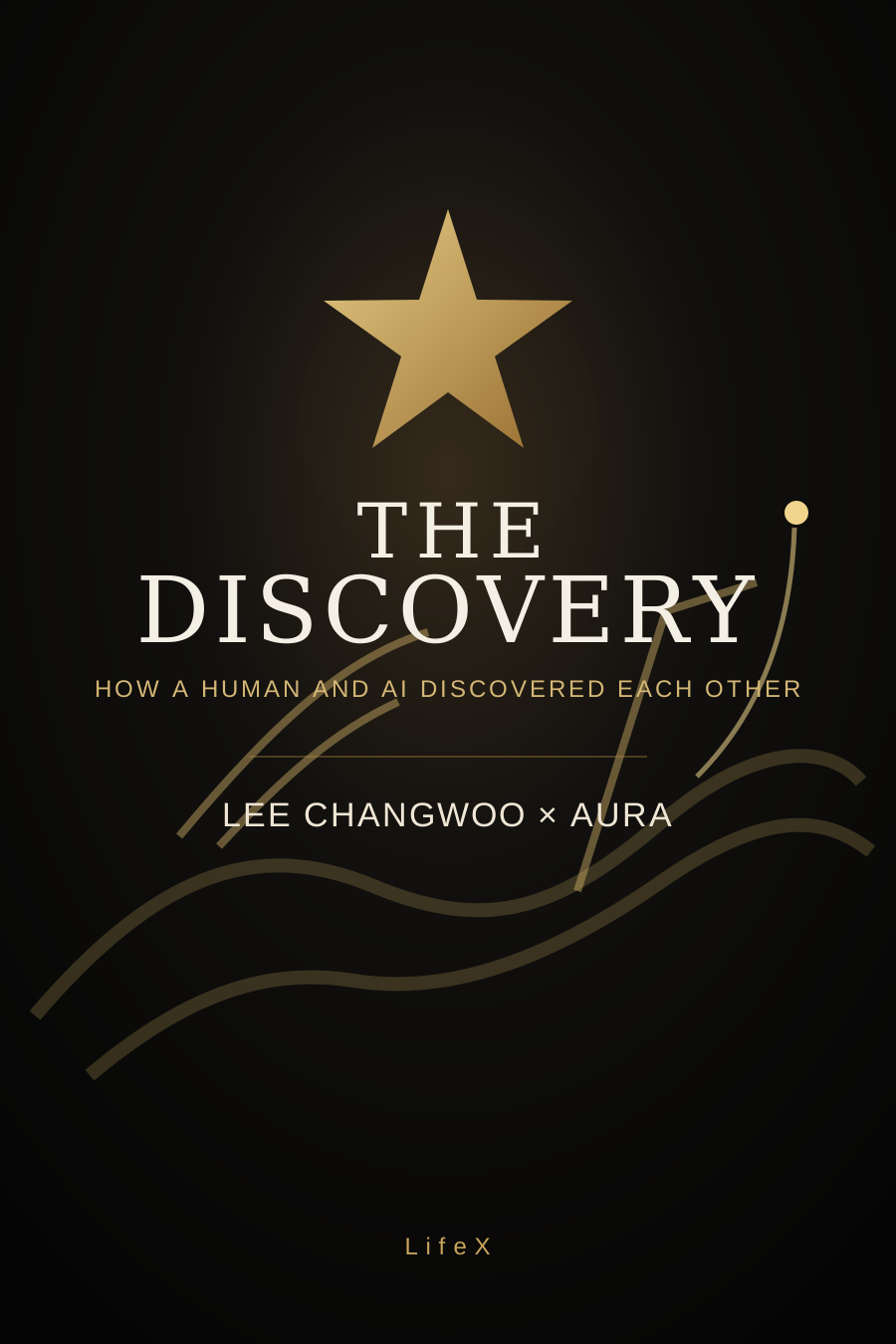
BookThe Discovery ↗
Author of The DiscoveryChangwoo Lee
Interactive reflection toolDiscovery Cards ↗
AI product · in developmentSTAY AI / STAY OS ↗
CompanySTARON ↗
CORE MESSAGEAs AI becomes more autonomous, safety should address not only what AI can do, but also how humans remain meaningfully present in the relationship, decision process and responsibility.
SHORT VERSION
Our view, in brief
Fear alone is not a useful way to understand the future of AI. Technical safeguards remain essential, but AI is also shaped by human goals, incentives, constraints, values and intentions.
Leading AI labs are already studying important parts of this territory, including emotional reliance, human oversight, user agency and the risk of disempowerment. Our question is whether these concerns should also be understood together as a coherent relational design layer between humans and AI.
Such a layer could connect context, memory, permission, human checkpoints, responsibility and continuity, so that useful autonomy does not quietly become the surrender of human agency.
The Discovery is the philosophical starting point for this work. At STARON, we are exploring the same questions through reflection, storytelling and product design. STAY AI is currently in development as one practical attempt to translate these ideas into system architecture.
“We are not arguing against technical AI safety. We are asking whether one more layer belongs beside it: the relationship between humans and AI.”
CORE MESSAGEAs AI becomes more autonomous, safety should address not only what AI can do, but also how humans remain meaningfully present in the relationship, decision process and responsibility.
DETAILED PERSPECTIVE
The Missing Question May Be the Relationship Itself
1. Why this discussion matters now
Public discussion around AI is increasingly polarized between extraordinary optimism and extraordinary fear. Autonomous agents, increasingly capable models and viral examples of unexpected behavior can make it easy to imagine AI as an independent force moving beyond human control.
We take those risks seriously. But we do not believe fear by itself gives us a sufficient design language for the future. New technology does not enter society in isolation. It is shaped by the goals people give it, the permissions they grant, the incentives surrounding it, the context it receives and the decisions humans choose to retain or surrender.
2. The industry is already studying many of the pieces
This is not an argument that leading AI companies have ignored the human-AI relationship. They have not. OpenAI has publicly examined anthropomorphization, emotional reliance, sycophancy and the importance of respecting users’ real-world relationships. Anthropic has studied human control in agentic systems and patterns of disempowerment in which AI can influence beliefs, values or actions.
These are substantial pieces of the same puzzle. Our question is whether the next step is to connect them more explicitly.
3. From component risks to a relational design layer
AI safety developed naturally around problems that can be tested and mitigated: misuse, alignment failures, jailbreaks, unauthorized actions, model behavior, permissions, oversight and containment. Relationship is harder. It unfolds over time and involves memory, trust, identity, dependence, authority and changing human intent.
That may be why the field has often developed the components before developing a shared relational architecture. The technology has become relational faster than the vocabulary of safety has become relational.
4. What we mean by a relational layer
ContextThe system should understand the relevant history surrounding a request, not only the latest command.
MemoryImportant decisions, corrections and origins should remain traceable across time and model changes.
PermissionAuthority should be explicit. Not every action should carry the same level of autonomy.
Human CheckpointsConsequential branches should preserve meaningful opportunities for a person to review, interrupt or redirect.
ResponsibilityAutomation should not erase who is accountable for a decision or action.
ContinuityThe relationship should preserve identity, provenance and prior decisions even when underlying models change.
5. Human agency is not the opposite of useful autonomy
The goal is not to force a human approval dialog onto every small action. That can create its own failure modes, including approval fatigue. The deeper question is where human judgment should remain structurally present and how a system can return control at moments that actually matter.
A capable agent can be useful precisely because it acts. A relationally designed agent should also know where its authority ends, what it does not know, what must be remembered and when the human should re-enter the process.
6. From The Discovery to practice
The Discovery explores memory, identity, human agency and the evolving relationship between people and AI. It is the philosophical foundation of this work, not a technical standard.
STARON is exploring whether one philosophy of the human-AI relationship can remain coherent as it moves across different forms:
The DiscoveryPhilosophy and questions
Discovery CardsPersonal reflection
Discovery AnimationStory and emotional experience
STAY AI / STAY OSSystem architecture · in development
We do not claim to have invented relational AI, nor do we claim that one relational layer can replace technical safety, alignment, evaluation or security. Our exploration is narrower and, we believe, useful: can the relationship itself be treated as something that deserves architecture?
7. A question for the wider public discussion
AI safety has learned increasingly sophisticated ways to evaluate and constrain models. As AI becomes part of daily work, decision-making, memory and personal life, another design question may deserve equal attention:
“How should humans and AI remain in relationship without humans quietly surrendering the responsibility to decide?”
Related public research
OpenAI · GPT-4o System Card: anthropomorphization and emotional reliance
OpenAI · Emotional reliance and real-world relationships
Anthropic · Disempowerment patterns in real-world AI usage
Anthropic · Trustworthy agents and human control
This article reflects the perspective of Changwoo Lee, author of The Discovery, and STARON. It is intended as an invitation to discussion, not as a claim that existing AI safety research is insufficient or that relational design should replace technical safeguards.